Tuesday, June 9, 2026

Wednesday, June 3, 2026
Evening of Dhamma sharing with Chao Khun Keng
In this evening Dhamma talk in Sydney, Ajahn Keng, a Singaporean monk from Theravada tradition reminded us of the five precepts and doing good deeds. I like his Dhamma talk as he is quite humorous and share interesting insights.
Sunday, May 31, 2026
Happy Vesak Day! 卫塞节快乐!
Happy Vesak Day to all Buddhists! Today is a sacred day, commemorating Sakyamuni Buddha's birth, enlightenment and parinirvana. As a Buddhist, I try to follow Buddha's teaching. Buddha taught us to be compassionate to all sentient beings. I try to eat more vegetarian food and meditate. Thank you Buddha for your selfless teaching for 45 years. Amitofo. 阿弥陀佛!🙏
Gate Gate Paragate Parasamgate Bodhi Svaha
Gate Gate Paragate Parasamgate Bodhi Svaha
Gate Gate Paragate Parasamgate Bodhi Svaha
Did you know that there is a Bodhi tree aka the sacred fig at Singapore Jewel airport? It is located at level 5, Canopy Garden. Buddha was enlightened under the Bodhi tree.
Let's recap Buddha's teaching
苦集灭道
1. Suffering exists in everyone’s life.
2. The causes of suffering are greed, anger, and ignorance.
3. Nirvana, the extinction of suffering, is possible for everyone.
4. Nirvana is achieved by following the Noble Eightfold Path.
The Noble Eightfold Path.
1. Right Views
2. Right Thoughts
3. Right Speech
4. Right Conduct
5. Right Livelihood
6. Right Effort
7. Right Mindfulness
8. Right Meditation
你知道新加坡樟宜机场有一棵菩提树. 它位于5层的Canopy Garden区域。佛陀正是在菩提树下悟道成佛.

Enlightenment of the Buddha
Like and Subscribe to Blooming Flowers, Arts and Travel.


Beautiful heart-shaped leaf.

Sunday, April 19, 2026
Jatakas Tales: Plumeria Flowers
Plumeria tree is also known as the Temple tree as they are commonly planted in Buddhists temple in Asia. Plumeria is listed among the "Five Trees and Six Flowers" in many Buddhist countries. The five trees are the Bodhi (Ficus), Sal (Shorea), Ashoka (Saraca), Sandalwood (Chandan) and Banyan tree. The six flowers are lotus, specific plants are planted to create a conducive environment to meditation. In the Jatakas Tales, it is believed that in one of the Buddha's past lives, he was a Plumeria tree.
You can read the following from Parallax.org here about one of Buddha's past life as a plumeria tree.

The story the Buddha told of his lifetime as a plumeria tree was that he lived next to a very beautiful lotus pond, filled with fragrant flowers, and not far from him was a very muddy little pool that was filled with shrimp and crab, even a couple of fish. A heron came to that area once, and the heron saw all the life in the muddy pond and thought to himself, “Oh, I would like to eat that life. But if I just go chasing after them, they’ll all hide.” So, being a smart heron, he went over and waded into the pond and he said, “Little fish, little shrimp, don’t be afraid. I’m here to carry you over to that beautiful lotus pond. You can get in my beak and I’ll take you there.”
Because the shrimp and the fish and the little crab were fairly smart, they said, “Oh, we don’t believe you. You just want us to jump in your bill so you can swallow us whole.”
But the heron said, “No, no, I’m not a heron like that; you can really trust me. You can trust me so much that I’ll take one of you over to visit the lotus pond and then you can come back and tell everybody what it’s like.”
None of the animals were willing to do that, except for one very old fish, who had heavy, thick, tough scales and very little meat. Bony, old, ancient fish. And that fish said, “You can take me over to the lotus pond,” because he knew that if he got eaten then nobody else would go. And he knew that he didn’t have very long to live anyway, and besides that, he would not be tasty.
So the heron picked up the fish in his bill and flew over to the lotus pond and let the fish go. The fish swam around the lotus pond and indeed, it was very beautiful; the waters were cool and fresh and there was a lot to eat. It was lovely being in the lotus pond. After he had spent some time there, he came back to the shore and said to the heron, “You can take me back to my pool now.” So the heron took him back to the little muddy pool and let him go.
And the old fish said, “Indeed, the heron did take me to the lotus pond,” and he described the lotus pond to everyone. And he said, “But you should still use your own judgment about whether you want to take that journey or not.”
But needless to say, all the little shrimp and fish lined up and said, “Take me, take me.”
And so the heron picked up the first shrimp and took it over and landed beneath the plumeria tree and proceeded to eat the shrimp and spit out the shells, the carapace of the shrimp. When the plumeria tree saw this, he felt so terribly sad. He said, “This heron has lied. He has not only lied, he has manipulated, he has broken the trust.”
But the Buddha then was a plumeria tree, and could only stand there and feel really sad; he couldn’t change the situation. And after the heron finished the first shrimp, he went back, and got another shrimp and ate him under the plumeria tree. And every time he went back, he would assure the other shrimp and fish that those in the lotus pond were very happy, that he was willing to take them all over, not to worry. And so, one by one, he took all the shrimp and all the fish underneath the plumeria tree, and ate them.
And the Buddha standing there, fragrant flower plumeria Buddha, was so sad, that he could feel tears running down his bark. But standing there as a tree, there was nothing he could do.
Finally the only one left in the pond was crab. The crab was feisty and said, “I don’t entirely trust you. So if you take me, I don’t want to be in your bill, I want to ride with my claws holding onto your neck.”
And the heron thought, and said, “That will be okay.”
So the crab put his claws on the heron’s neck and they flew. When they flew over the plumeria tree he could see all the shells and the bones of the shrimp and the fish, and he knew that the heron had eaten them all. So he tightened his claws on the neck of the heron and said, “You have been lying. You’ve eaten all my friends.”
And the heron chuckled. But when they landed, the crab pressed his claws tighter and tighter on the heron’s neck, until it broke. The heron died and the crab went into the lotus pond.
The Buddha was standing there, just watching it all happen with his full attention. And what the Buddha realized was that when we feel helpless, it is very important to strengthen our intention to practice: to transform suffering, to be a source of kindness and peace. And as a plumeria tree, the Buddha vowed that whenever he had an opportunity to manifest peace, to make a difference, to change something, to transform some suffering in the world, he would do that. And his intention to practice became very, very strong.

Image from Tsz Shan Monastery https://www.tszshan.org/home/new/uploads/plants/Plumeria.pdf
Like and Subscribe to Blooming Flowers, Arts and Travel if like flowers and arts too.
Sunday, March 8, 2026
Buddha: Let The Precepts Be Your Teacher
More than 2500 years ago, Shakyamuni Buddha already advised his disciples to treat the precepts as their teachers. It is disappointing to read of some people wearing monk robes and cheat devotees of their money and not practising the precepts. One has to bear in mind that Buddha didn't teach you to be rich. Buddha's core teachings are the Four Noble truths and karma. Sometimes I think karma teaches you about empathy as some people don't understand the impact their action has on others until someone treat them the same way. Cause and effect are real. Just a matter of time.
The Four Noble Truths are:
1) Suffering exists in everyone's life. They include dissatisfaction and impermanence.
2) The causes of suffering are greed, anger and ignorance.
3) Suffering ceases when craving and attachments are eliminated, achieving. Nirvana.
4) The way to end suffering is the Noble Eightfold Path.((Right Views, Right Thoughts, Right Speech, Right Conduct, Right Conduct, Right Livelihood, Right Effort, Right Mindfulness, Right Meditation.) Some people disagree with Right. If not Mindful or Moral( not hurt anyone).

Image from Buddha drama.
Now AI is on the trend. Let's see what AI share on Buddha and the precepts.
From AI:
Before entering Nirvana, the Buddha advised his disciples to treat the
precepts (sila) as their teacher, serving as a guide for ethical conduct in his absence. These guidelines—avoiding harming, stealing, sexual misconduct, lying, and intoxicants—are not mere restrictions, but tools for cultivating wisdom, compassion, and mental clarity.Key Aspects of the Precepts
- A Guide for Conduct: The precepts (Sila) are considered the foundation of spiritual practice, helping to avoid mistakes and cultivate a harmonious life.
- The Five Precepts (For Laypeople):
- Refrain from taking life: Promoting compassion and respecting all beings.
- Refrain from stealing: Promoting honesty and respecting property.
- Refrain from sexual misconduct: Promoting respect and trust.
- Refrain from lying: Promoting truthful speech.
- Refrain from intoxicants: Maintaining a clear mind to avoid negligence.
- Significance: Following these principles helps to break free from greed, reduce desires, and protect oneself from negative karma. They are viewed as a "hook" to remove the "poisonous snake" of afflictions, such as anger and desire, from the mind.
Wednesday, February 4, 2026
Movie on Bodhidharma Master of Zen《達摩祖師傳》
I like to watch movies relating to Buddhism as I get to learn wisdom from Buddha's teaching. This is a movie on Bodhidharma. The director of this movie became a monk after directing this film. Amituofo 阿弥陀佛.
Monday, December 15, 2025
Chao Khun Keng Dhamma talk on Kathina Day eve 25th Oct 2025
Thankful to my friend for sharing this video of Ajahn Keng. I find Ajahn Keng's sharing relevant to Singaporeans as Ajahn Keng is from Singapore.
In this video, Ajahn Keng reminds us of the five precepts as taught by Buddha Shakyamuni.
Monday, July 28, 2025
Ajahn Keng Talked About The Monk Who Stole.
Ajahn Keng, a Singaporean monk who was ordained in Thailand shared about the karma faced by a monk in Thailand who stole temple money. The monk suffered in the lower realm and he was only reincarnated after his daughter apologised to the other monks. It's your choice to believe the talk. Just take note just because you can't see beyond the physical realm doesn't mean others cannot. In Singapore, a monk who took temple fund was discovered and served his time for fraud and misappropriation of funds.
Karma is real and truth will be revealed ultimately. Just do good and there be good results and do bad, there be consequences. Corrupted people who abused temple money must face the consequences. Do take note that real monks do not accept money during alms round. They only accept food.
Sunday, July 27, 2025
Twelve Links of Dependent Origination- Craving
Craving and grasping increases attachment and therefore forms the karmic force that will bring human to the next life in the cycle of birth, aging and death.
This book, The Boy Who Saw Truth that I read recently reminded me of the 12 links of dependent origination taught by Shakyamuni Buddha. I hope you find this sharing from this book and another post on 12 links of dependent arising useful in your spiritual path.
May all beings be well. 阿弥陀佛 Amitofo!
Earlier post on Approaching the Heart Sutra in Terms of Time- 12 Links of Dependent Arising.


Image from here

From The Boy Who Saw Truth

Tuesday, June 10, 2025
Heart Sutra 心经
Various Hong Kong celebrities like Jacky Cheung, Jacky Chan and Aaron Kwok and many others sang the Heart Sutra in Cantonese in 1999 to raise funds for Taiwan earthquake.
Sunday, June 8, 2025
Diamond Sutra(Updated) 金刚经
In this post, I translated meaningful part of this drama on the life of the 6th Patriarch of Chan, the Venerable Huineng as I find that Venerable Huineng explanation of Diamond Sutra is helpful. I find that after reading Buddha's teaching, I don't worry as why waste time worrying over something that is illusion in this transient life in this temporary body? Once you know your true mind, you don't get attached to external transient things. Just let go and your mind is at ease.
Please highlight to me if there is error in translating.
Venerable Hui Neng, the Sixth Patriarch of Chan (February 27, 638 – August 28, 713) was said to attain awakening when he heard a verse from the Diamond Sutra 应无所住而生其心.
When the Fifth Patriarch of Chan Venerable Hong Ren explained to him the Diamond sutra. Venerable Hui Neng was "suddenly and completely enlightened, and he understood that all things exist in self-nature.
凡所有相,皆为虚妄
因为一切形相 都是因缘和合而成
随缘而生,随缘而灭
菩提本无相, 相乃人心中之物
心中有相,就可以将菩提本性遮蔽
All appearances are illusion
Because all forms are formed by the combination of cause and effect
Arises with fate, extinguishes with fate
Bodhi has no form, and form is in the human mind
If the mind has form, one can conceal the nature of Bodhi
应无所住而生其心,
云何应住,云何降伏其心 When does the cloud abide, how does the cloud calm the mind
佛说应无所住而生其心 Buddha said without abiding in forms, arises the mind
即是说心即是佛,佛即是心 Meaning Pure Mind is Buddha and Buddha is Pure Mind.
他做了一首偈子Venerable Huineng came up with the following stanza when he understood the verse. I think true mind, is our consciousness.
何其自性本自清净!What is true mind, it is intrinsically pure (not perturbed)
何其自性本不生灭!What is true mind, it is neither born nor extinguish
何其自性本自具足!What is true mind, it is self-sufficient
何其自性能生万法!What is true mind, it can produces immeasurable dharma/ideas
From the Diamond Sutra
Subhuti, all great bodhisattvas should give rise to purity of mind in this way: they should not give rise to a mind that abides in form; they should not give rise to a mind that abides in sound, smell, taste, touch, or dharmas. They should give rise to a mind that does not abide in anything.
Subhuti, a bodhisattva should turn away from all notions, and initiate the mind of anuttara samyaksambodhi. He should not give rise to a mind abiding in form, and he should not give rise to a mind abiding in sound, smell, taste, touch, or dharmas. He should give rise to a mind that does not abide in anything.
When we contemplate the following verses from the Diamond Sutra, your mind should not be affected by forms which are transient, dependent on causes and conditions.
一切有为法,如梦幻泡影,如露亦如电,应作如是观
“All conditioned phenomena
Are like dreams, illusions, bubbles, and shadows, Like dew and lightning.
One should contemplate them in this way. “
All phenomena appear in the world is a combination of causes and conditions that is temporary by nature. It will pass. There is no permanent nature to form which is subjected to change due to causes and conditions, thus it is illusory. Thus why be sad over something that is illusory. Just let it go and not be attached to it.
A lot of suffering comes from the mind which is influenced by forms like sight, hearing, touch, taste or perception. When someone criticised us, we get upset, when someone own something we don’t have, we want it. We are always influenced by the three poison, greed, anger and delusion.
From the book, Miracles Happen: The Transformational Healing by Dr Brian Weiss, “ Chinese philosopher Hui-neng (6thpatriarch of Chan Buddhism/Zen) wrote, “When we are free from attachment to all outer objects, the mind will be in peace. Our essence of mind is intrinsically pure, and the reason why we are perturbed is because we allow ourselves to be carried by the circumstances we are in. He who is able to keep his mind unperturbed (calm), irrespective of circumstances has attained enlightenment. “
A woman who went through a near-death experience shared,” I realized that life is like a dream”. She wrote, “ When you are born, you wake up into mortality in this physical body. When your physical body dies, you return to immortality.”
I realised what is 无我 no-self as our consciousness or mind changes identity in various body forms in our many reincarnations. Thus there is no permanent self-identity. Do not cling to anger and just let go.
Episode 8, From 18:30, the Sixth Patriarch Hui met Fifth Patriarch Hong Ren.

From Miracles Happen: The Transformational Healing by Dr Brian Weiss,
Diamond Sutra Part 1 is here
Episode 3: From 35:30, when Venerable Huineng heard a monk reciting the Diamond Sutra.
The Diamond Sutra 金刚经
Friday, May 23, 2025
Venerable Thubten Damcho
I came across this interesting conversation of two Singaporeans Chade Meng Tan, a former Google employee and also known as Jolly Good Fellow and Venerable Thubten Damcho who graduated from Princeton University.
What is true happiness? If what you are doing is in line with your values and you live authentically, then you certainly have true happiness.
Do watch this interesting conversation. Amitofo. 阿弥陀佛。
Monday, May 12, 2025
Dendrobium Buddha Tooth Orchid at Singapore Buddha Tooth Relic Temple and Museum
Happy Vesak Day! Today Buddhists commemorate the birth, enlightenment and parinirvana of Siddharta Gautama Shaykyamun Buddha.
Did you know that at the rooftop garden at Singapore Buddha Tooth Relic Temple and Museum in Chinatown, there is a unique hybrid bright lime green orchid purplish pink lip which is a cross between Dendrobium Burana Jade and Dendrobium Palolo Sunshine?
The national flower of Singapore is orchid and you can say that creating orchid hydrid is our forte. Let's take a look at the Dendrobium Buddha Tooth orchid.
Nearest MRT station: Maxwell MRT station

Dendrobium Buddha Tooth orchid

Video of Singapore Buddha Tooth Relic Temple and Museum. Like and subscribe my Youtube channel.

Singapore Buddha Tooth Relic Temple and Museum

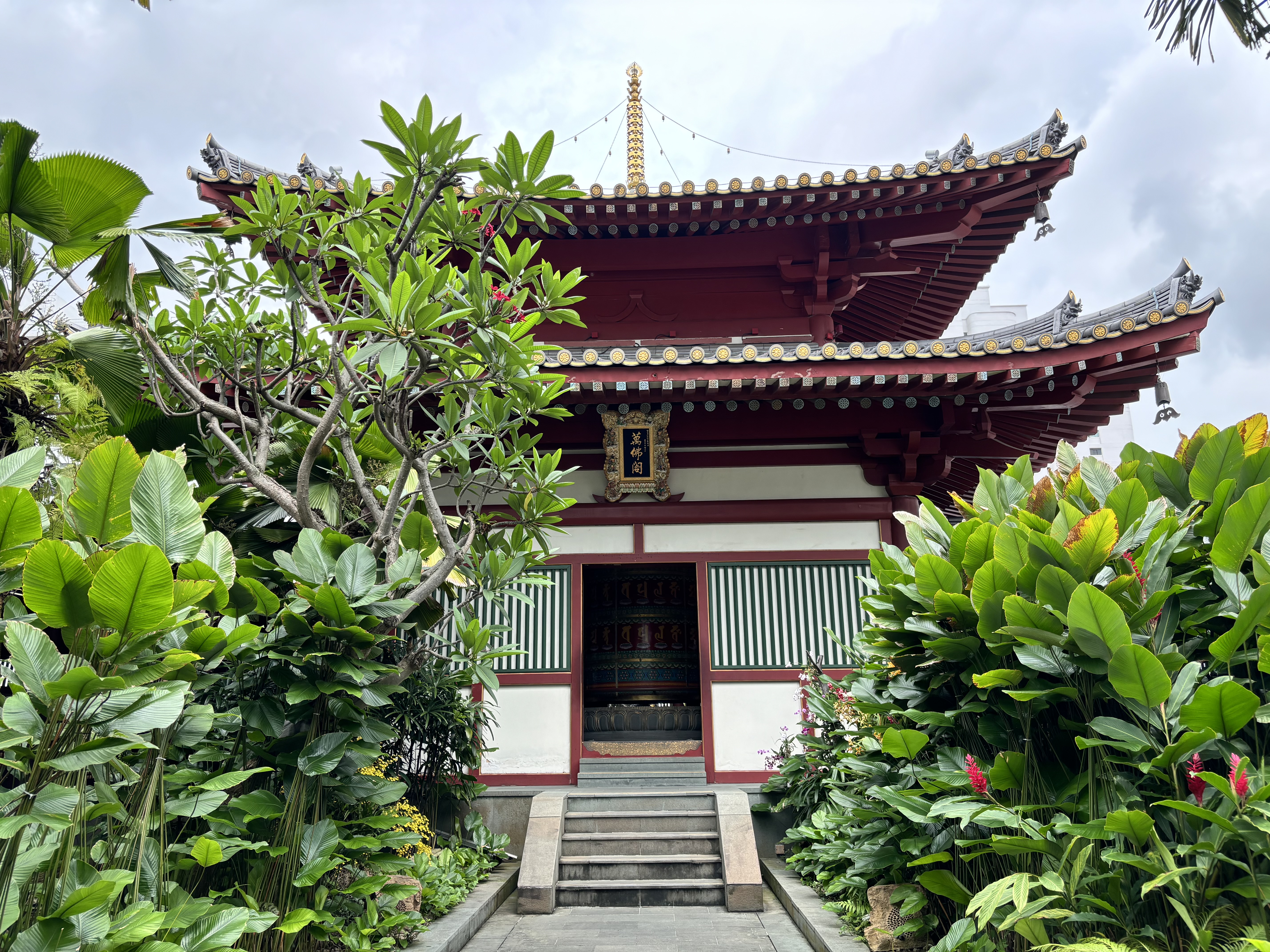
Prayer wheel at the rooftop garden
Happy Vesak Day 2025!
Happy Vesak Day! Last week, I visited the Buddha Tooth Relic temple at Chinatown to thank the Buddha and Bodhisattvas for safe trip and also to pray before Vesak Day. I was surprised to see many tourists visiting the Buddha Tooth Relic temple last weekday. It is a popular attraction. Do take note to dress appropriately. If you wear shorts or short skirt, you be offered a wrap cloth to cover.
On Vesak day, Buddhists commemorate the birth, enlightenment and parinirvana of Siddhartha Gautama Shakyamuni Buddha. The compassionate and kind Buddha spent 49 years teaching the Four Noble Truths and the Noble Eightfold path to end samsara. Buddhism or Buddha's teaching is not about pessimism. There is a way to end suffering and that is to follow the Noble Eightfold path which helps to end rebirth.
Buddha is compassionate to all sentient beings. I try to practise too. Sometimes when I see ants on my cup (when I didn’t wash throughly), I just move it and the ants will scramble away, trying to live. Looking at the small ants, I told them to go away quickly, going back to where they came from and they really scurried off, reminding me that they value their lives too. All sentient beings want to live, so please don't hurt living beings when possible. What goes around, comes around.
因果真实不虚。有果必有因。
At Level 3, you can explore the museum where you can find out more about the Buddha and his relics in the relic chamber. No photography is allowed in the Relic Chamber.

At Buddha Tooth Relic Temple, there is relic museum. Beautiful relics also known as Sarira that looks like pearl or crystal-like beads are commonly found in the cremated ashes of Buddhist spiritual masters.
From Buddha Tooth Relic Temple and Museum website here
"Sariras, the Sanskrit name for relics, refers to the remains of a body part usually after cremation. In Buddhist context, sariras refers to the crystallization of solid remains of especially Buddha Sakyamuni after His cremation. Henceforth, relics are also broadly defined to include solid remains of other Buddhist practitioners, regardless of Sangha and secular disciples.
The emergence of relics signifies that the spiritual energy of Buddha or the spiritual practitioner during their lifetime is constant and serene, untainted by nature’s forces yet elevated due to persevering religious practices. Hence, this energy is converted to physical forms to what we known as relics. Relics are the essence of wisdom, the fruit of spiritual labour, which are free of lust, greed and wrath."
My colleague shared with me his Buddhist friend who practised meditation was found to have relics when his relatives collected his cremated ashes.
Venerable Chao Khun Keng explained that the mind is like a laser beam. Due to the purity of the mind, for some of the monks, their hair can turn to relics. Pure mind that doesn't have greed, hatred and delusion. Pure energy that channel go to the body.
Before enlightenment, Buddha spent 6 long years practicing asceticism and long fasting, causing his body to be weakened and he almost lost his life. While meditating one day, he heard someone playing a string instrument and came to the realisation that the Middle Path is the way for achieving the liberation of body and mind.
"Cultivation is like playing a musical string instrument. The string will snap if it is too tight, or not make any sound if it is too loose. Indulgence in sensual pleasure or extreme penance are attachments. The Middle Path is the way for achieving the liberation of body and mind."
After attaining enlightenment after 7 days of deep meditation, Buddha had compassionately taught sentients being the Four Noble Truths. Buddha reminded us to think and investigate his and others' teaching before accepting it.
The Four Noble Truths are
1) The truth of suffering. Like it or not, both the rich and poor go through suffering. The suffering of old age, not getting what you want, separation, sickness.
2) The truth of the cause of suffering (craving, anger and delusion)
3) The truth of the end of suffering. (There is a way to end suffering)
4) The truth of the path that leads to the end of suffering is the Noble Eightfold paths.
The Noble Eightfold paths which helps to develop Sila (ethical conduct), samadhi (mental discipline or meditation) and panna (wisdom) 戒定慧 are as follows
1) Right Thought (be aware of your thinking with good intention. Eliminate greed, anger and delusion)
2) Right View (understanding of cause and effect, 12 links of dependent origination)
3) Right Speech (Refrain from lying, gossip, idle, harsh speech. If one has nothing helpful to say, be silent) Hmm, this is something I might need to work on it but hey I'm just stating the truth and my intention is to warn people.
4) Right action (moral, honorable and peaceful conduct). Hmm sometimes I'm quite mischievous.
5) Right livelihood (Honest living, Refrain from making a living that harm others like selling weapons, intoxicating drinks, and toxins) This is why I don't support people making use of Buddhism to make money especially in places like night clubs that sell alcohol. Buddha warned his disciples not to drink alcohol as it might cause them to be careless in their action and thus create bad karma. If that dj wants to perform, don't wear monk robe as real monks and strict Buddhists don't drink alcohol. Not drinking alcohol is one of the five precepts for lay Buddhists.
6) Right effort (prevent unwholesome state of mind)
7) Right mindfulness (be aware and mindful of one's thoughts and feelings
8) Right concentration (meditation)
On Vesak Day, this is the day for me to remember Buddha's teaching and to remind me to be mindful. There were some days when I was not mindful and I reacted.
I like this story about how Buddha interacted with an angry man and was not affected by his insulting words.
In this story, as Buddha was walking in a village, a very angry man insulted the Buddha and said that he had no right to teach others. Buddha was calm and serene as usual and he asked the man, “Tell me, if you buy a gift for someone, and that person does not take it, to whom does the gift belong?”
The young man was surprised to be asked such a strange question and answered, “It would belong to me, because I bought the gift.”
The Buddha smiled and said, “That is correct. And it is exactly the same with your anger. If you become angry with me and I do not get insulted, then the anger falls back on you. You are then the only one who becomes unhappy. All you have done is hurt yourself.”
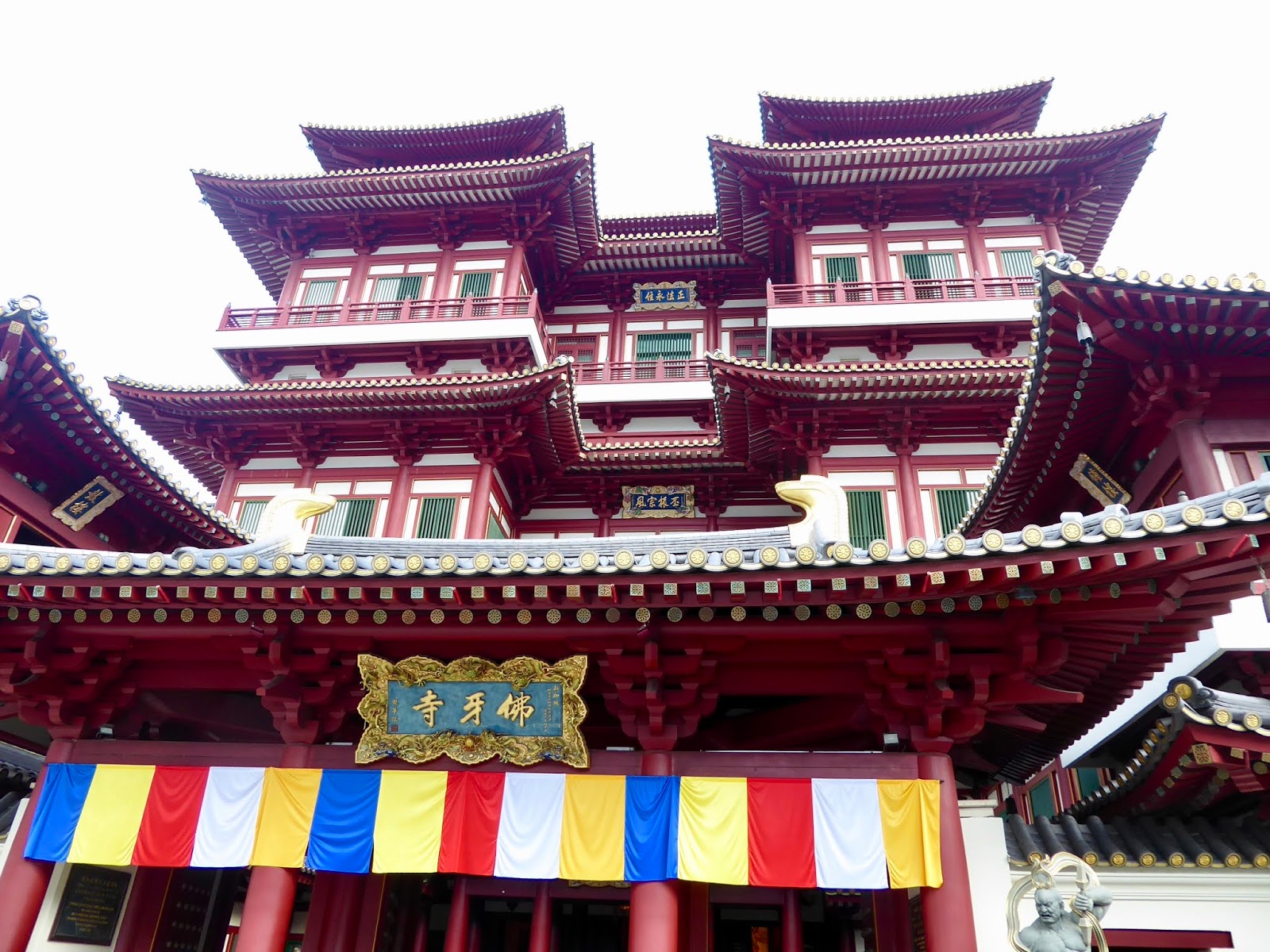
Buddha Tooth Relic Temple is located in Chinatown. It is just next to Maxwell MRT station.

Monks and lay Buddhist practitioners chanting at the main hall in the morning.

You can read more about Dendrobium Buddha Tooth orchid here.


At the roof garden

Sariras, relics (image from Google)
Chao Khun Keng explaining about relics 1:29:00. The monk when they meditate, they focus on the body. The mind is like a laser beam They use the mindfulness to scan the body. Due to the purity of the mind, the body can turn to relics. Due to the pure mind, the mind that does not have greed, hatred and delusion. It has the pure energy to channel into the body and clean up the body, it can also use pure energy to cure the sickness. In a way, meditation can enhance your health.
Subscribe to:
Posts (Atom)
-
This 2h movie on Surangama Sutra specifically on how Buddha correcting Ananda's wrong view. The following interaction between the Budd...
-
Today is the Enlightenment day of Avalokiteshvara Bodhisattva, who is also known as Guan Yin Pu Sa. He is the embodiment of great compass...
-
In this post, I translated meaningful part of this drama on the life of the 6 th Patriarch of Chan, the Venerable Huineng as I find that Ve...


